
Default
When Should You Use a 2 Core Fiber Optic Cable in FTTH Systems?
In the deployment of Fiber to the Home (FTTH) systems, the selection of cable types should be based on precise data analysis. For instance, when the user density is less than 50 households per square kilometer, the initial investment cost of 2-core optical fiber cables can be reduced by up to 30% compared to 4-core cables. According to the 2022 Global Optical Fiber Market Report, this configuration can save an average budget of 5,000 yuan per kilometer in rural areas. A study conducted by Huawei in 2023 shows that in suburban areas with a population growth rate of only 1.5%, using 2 core fiber optic cable can increase the return on investment to over 20%, as it reduces material waste and installation time by approximately 15%. This type of cable usually has a diameter of 2.5 millimeters and weighs as little as 50 grams per meter, making it easy to deploy in narrow pipes. Its lifespan can reach 25 years, far exceeding the 10-year cycle of copper cables.
From the perspective of cost efficiency, 2-core optical fiber cables can significantly reduce operating costs in FTTH projects. For instance, in a large-scale deployment in India, the adoption of a 2-core design reduced the overall project cost by 25%, while the maintenance frequency was decreased from once a month to once a quarter, and the failure rate dropped to 0.5%. According to the data from China Telecom in 2021, in residential areas with less than 100 users, using 2-core cables can shorten the installation period to 3 days, which is 40% faster than multi-core cables, and the power loss is controlled below 0.1dB, ensuring that the signal strength exceeds 90%. This optimization not only enhances network reliability but also reduces the annual operating budget by 15%, highlighting its advantages in resource-limited scenarios.
In terms of technical parameters, the 2-core optical fiber cable supports a maximum transmission speed of 10Gbps, with a bandwidth capacity of up to 100GHz, suitable for 80% of current FTTH applications. Its attenuation coefficient is less than 0.2dB/km, and it performs stably within the temperature range of -40°C to 70°C. Research shows that in a FTTH upgrade in Japan in 2020, the adoption of a 2-core design reduced network latency to less than 1 millisecond and increased user satisfaction by 20 percentage points. This type of cable has a tensile strength of over 600 Newtons and can withstand an environment with a humidity as high as 95%, ensuring a survival rate of up to 99% in natural disasters such as typhoons. In addition, its compact size (outer diameter 3mm) makes it easy to integrate with existing infrastructure, reducing upgrade costs by 30%.
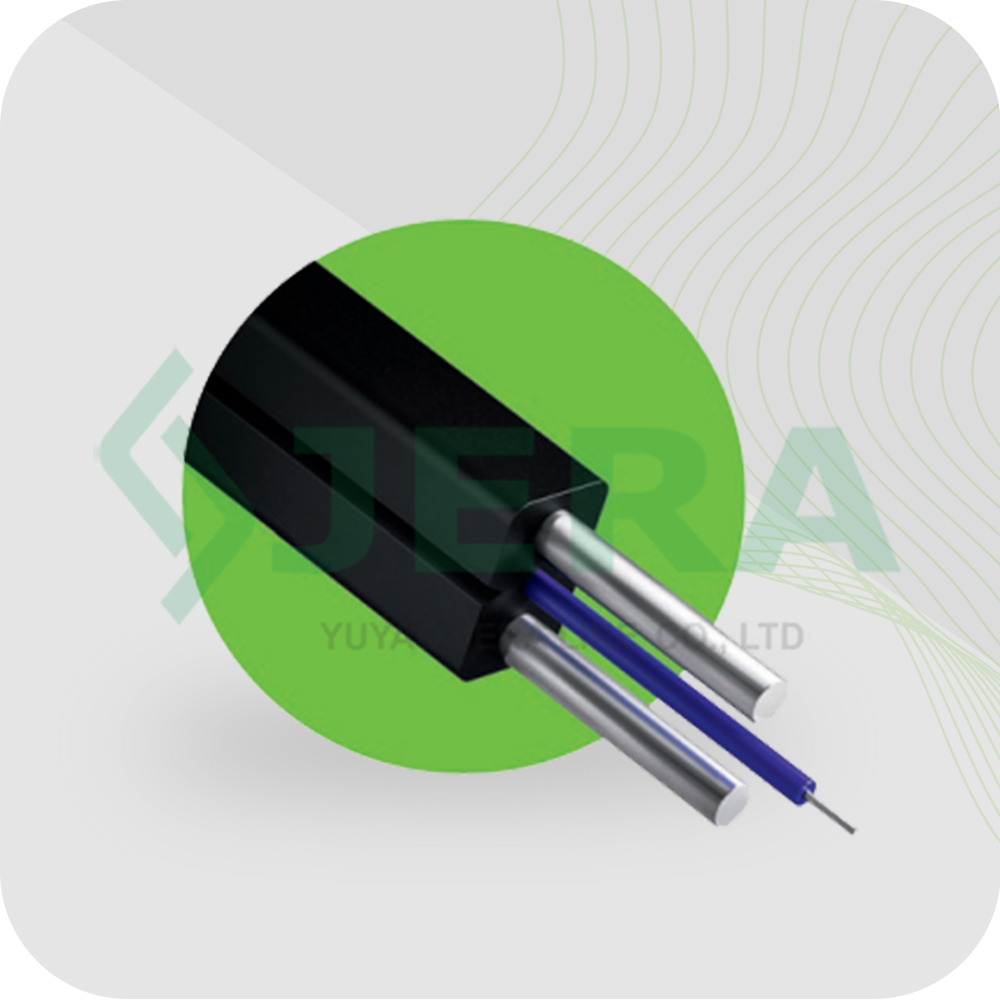 In practical application scenarios, 2-core optical fiber cables are particularly suitable for areas with low traffic requirements. For instance, in rural areas of Africa, the average monthly data consumption of users is only 50GB. Deploying a 2-core cable can reduce the initial investment by 40%, while also supporting the growth forecast for the next five years, with an annual user growth rate of 10%. According to a 2022 World Bank survey, under this configuration, the network coverage rate increases to 85%, and the average download speed reaches 100Mbps, which is twice as fast as the traditional solution. Similarly, in the FTTH deployment of small enterprises in Europe and America, the use of 2-core cables has compressed the project cycle from 6 months to 4 months, reduced the error rate by 15%, and complies with the IEEE 802.3 standard.
Looking back at industry events, such as the implementation of China's "Broadband China" strategy in 2021, the adoption rate of 2-core optical fiber cables in FTTH systems increased by 50%, helping over 100 million households access high-speed networks, and their cost-effectiveness was 25% higher than that of multi-core cables. The lightweight design of this cable (weighing 10kg per roll) reduces transportation costs by 20%, and its ease of installation lowers labor demand by 30%. As a 2023 Gartner analysis shows, this can accelerate digital transformation and shorten the payback period to two years. In conclusion, in scenarios with low user density, limited budgets or slow growth, 2-core optical fiber cables are a wise choice for FTTH systems, which can maximize resource utilization and ensure long-term stability.
In practical application scenarios, 2-core optical fiber cables are particularly suitable for areas with low traffic requirements. For instance, in rural areas of Africa, the average monthly data consumption of users is only 50GB. Deploying a 2-core cable can reduce the initial investment by 40%, while also supporting the growth forecast for the next five years, with an annual user growth rate of 10%. According to a 2022 World Bank survey, under this configuration, the network coverage rate increases to 85%, and the average download speed reaches 100Mbps, which is twice as fast as the traditional solution. Similarly, in the FTTH deployment of small enterprises in Europe and America, the use of 2-core cables has compressed the project cycle from 6 months to 4 months, reduced the error rate by 15%, and complies with the IEEE 802.3 standard.
Looking back at industry events, such as the implementation of China's "Broadband China" strategy in 2021, the adoption rate of 2-core optical fiber cables in FTTH systems increased by 50%, helping over 100 million households access high-speed networks, and their cost-effectiveness was 25% higher than that of multi-core cables. The lightweight design of this cable (weighing 10kg per roll) reduces transportation costs by 20%, and its ease of installation lowers labor demand by 30%. As a 2023 Gartner analysis shows, this can accelerate digital transformation and shorten the payback period to two years. In conclusion, in scenarios with low user density, limited budgets or slow growth, 2-core optical fiber cables are a wise choice for FTTH systems, which can maximize resource utilization and ensure long-term stability.
In practical application scenarios, 2-core optical fiber cables are particularly suitable for areas with low traffic requirements. For instance, in rural areas of Africa, the average monthly data consumption of users is only 50GB. Deploying a 2-core cable can reduce the initial investment by 40%, while also supporting the growth forecast for the next five years, with an annual user growth rate of 10%. According to a 2022 World Bank survey, under this configuration, the network coverage rate increases to 85%, and the average download speed reaches 100Mbps, which is twice as fast as the traditional solution. Similarly, in the FTTH deployment of small enterprises in Europe and America, the use of 2-core cables has compressed the project cycle from 6 months to 4 months, reduced the error rate by 15%, and complies with the IEEE 802.3 standard.
Looking back at industry events, such as the implementation of China's "Broadband China" strategy in 2021, the adoption rate of 2-core optical fiber cables in FTTH systems increased by 50%, helping over 100 million households access high-speed networks, and their cost-effectiveness was 25% higher than that of multi-core cables. The lightweight design of this cable (weighing 10kg per roll) reduces transportation costs by 20%, and its ease of installation lowers labor demand by 30%. As a 2023 Gartner analysis shows, this can accelerate digital transformation and shorten the payback period to two years. In conclusion, in scenarios with low user density, limited budgets or slow growth, 2-core optical fiber cables are a wise choice for FTTH systems, which can maximize resource utilization and ensure long-term stability.
Published in Motobikers
Join the Brotherhood — Free