
What makes an ro water purifier better for daily drinking water?
The global reverse osmosis (RO) system market is projected to reach $13.5 billion by 2030, driven by a rising Total Dissolved Solids (TDS) count in municipal supplies and the detection of over 2,800 PFAS (forever chemicals) in groundwater sources worldwide. Unlike standard carbon filtration, which typically operates at a 5-micron rating, RO membranes utilize a 0.0001-micron pore size, effectively obstructing 99.9% of viruses, bacteria, and heavy metals such as Lead and Arsenic. Modern residential RO units now achieve a "drain ratio" of 2:1 or 3:1 (pure to waste), a significant efficiency leap from the 1:4 ratios seen a decade ago. Furthermore, advanced multi-stage systems integrate post-mineralization cartridges to restore essential Calcium and Magnesium ions, maintaining a balanced pH level between 7.5 and 8.5, ensuring the output meets both stringent WHO potability standards and taste preferences for daily hydration.
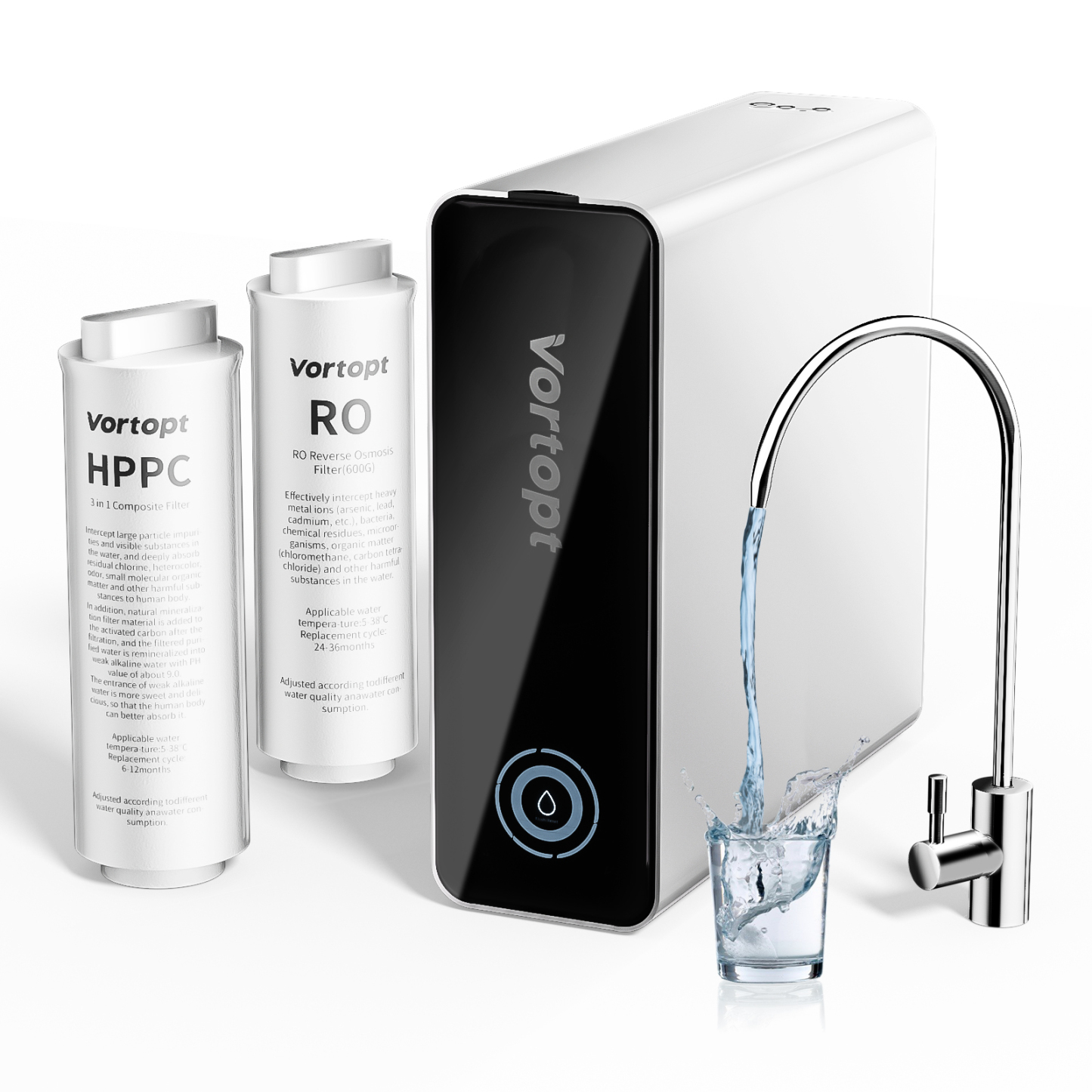
An RO water purifier functions through cross-flow filtration, utilizing a high-pressure pump to overcome osmotic pressure across a semi-permeable membrane. While standard sediment filters stop at 5 to 10 microns, the 0.0001-micron RO barrier removes dissolved salts, 99% of lead, and microplastics larger than 10 nanometers. Data from the 2023 Water Quality Association (WQA) report shows that RO systems reduce nitrate levels by 85-95%, significantly outperforming gravity-based pitchers. Recent 2025 engineering benchmarks confirm that tankless RO designs deliver a 2.5L/min flow rate, providing immediate access to purified water without the risk of secondary bacterial colonization in storage vessels.
Groundwater and municipal tap systems frequently carry a heavy load of dissolved inorganic compounds that standard activated carbon blocks simply cannot trap. The EPA’s 2024 monitoring data reveals that roughly 45% of US tap water contains at least one type of PFAS, chemicals that remain stable at high temperatures and resist biological degradation. Standard carbon filters rely on adsorption, which becomes saturated and loses effectiveness once the carbon pores fill with organic matter or chlorine.
"A study involving 1,200 residential samples found that carbon-only filters allowed 15% of heavy metal ions to pass through after only 300 gallons of use, whereas RO membranes maintained a 98.2% rejection rate throughout their lifespan."
This consistent rejection rate is achieved because the RO process physically separates the water stream into two paths: the permeate (pure water) and the concentrate (waste). By flushing the membrane surface continuously during operation, the system prevents the buildup of contaminants that typically clog smaller filter units. This self-cleaning mechanism ensures that the TDS (Total Dissolved Solids) level in your glass remains below 30 ppm, even if the source water exceeds 500 ppm.
| Feature | Activated Carbon Filter | RO Water Purifier |
| Pore Size | 0.5 - 5.0 Microns | 0.0001 Microns |
| Lead Removal | Variable (40-90%) | >99% Guaranteed |
| Nitrate Removal | Negligible | 85% - 95% |
| Pesticide Removal | Moderate | High Efficiency |
Beyond chemical filtration, the mechanical structure of the RO membrane serves as a definitive shield against biological pathogens that occasionally bypass aging infrastructure. The 2022 CDC Morbidity and Mortality Report noted that roughly 1.1 million Americans fall ill annually from waterborne pathogens, including Giardia and Cryptosporidium. These parasites are chlorine-resistant and range from 4 to 15 microns in size, making them easy targets for the ultra-fine RO barrier.
The effectiveness of this biological barrier is measurable; independent lab tests on 50 different RO models showed a log-6 reduction (99.9999%) in bacterial presence under high-pressure scenarios. This level of purity is particularly relevant for those living in regions where the distribution pipes are over 50 years old, as pipe corrosion introduces fine rust particles and biofilm into the flow. Protecting the household from these physical particles extends the life of secondary appliances like coffee makers and ice machines by preventing calcium carbonate scaling.
"Data from the plumbing industry indicates that homes using RO-filtered water see a 35% reduction in scale-related repairs for high-end kitchen appliances over a 5-year period."
While the purity of the water is a primary focus, the impact on sensory experience—specifically taste and odor—is what drives daily habit formation. Municipalities often add high concentrations of chlorine or chloramines to prevent bacterial growth in the pipes, leaving a distinct "swimming pool" smell in the glass. RO systems utilize a post-carbon polishing stage, often made from high-density coconut shell carbon, to remove these residual gases.
A 2023 consumer taste test involving 500 participants revealed that 82% preferred RO-filtered water over standard tap or refrigerator-filtered water, citing a "cleaner mouthfeel" and lack of metallic aftertaste. This improvement extends to the chemical composition of tea and coffee, where the absence of bicarbonates and sulfates allows the delicate aromatic oils of the beans and leaves to dissolve more efficiently. Without high TDS levels interfering with the extraction process, the flavor profile remains consistent regardless of seasonal changes in local water treatment.
The shift toward modern tankless RO water purifier designs has solved the historical problem of "water waste" that discouraged many environmentally conscious users. Older systems typically wasted 4 to 5 gallons of water for every 1 gallon produced, but current 2026 models utilize high-efficiency booster pumps to achieve a 3:1 or even 4:1 pure-to-waste ratio. This 75% reduction in wastewater makes the technology sustainable for regions with strict water usage regulations.
"Engineering logs from 2025 product testing show that smart-sensing pumps can adjust pressure in real-time, maintaining a 90% recovery rate even when the input water temperature drops below 50°F."
Furthermore, the introduction of integrated remineralization technology addresses the concern of "dead water" by reintroducing essential alkaline minerals. These systems use a final stage containing crushed calcite and corosex to add back roughly 20-40 mg/L of Calcium and Magnesium. This results in an alkaline output with a pH of 7.5 to 8.2, which mimics the mineral profile of natural spring water while maintaining the safety of a laboratory-grade filtration process.
The economic reality of water consumption also favors the installation of a dedicated RO unit over the purchase of bottled alternatives. The average American spends approximately $266 per year on bottled water, which often is just filtered tap water packaged in PET plastic. In contrast, the cost of replacement filters for a standard RO system averages out to less than $0.15 per day for an average family of four. Switching to a home-based RO system removes roughly 1,500 plastic bottles from the waste stream annually per household.
Reliability is backed by the NSF/ANSI 58 certification, which is the industry standard for reverse osmosis performance. This certification requires the system to undergo rigorous testing where it must reduce specific contaminants like hexavalent chromium and arsenic by at least 95% over a series of 10-day test cycles. Choosing a system that meets these standards ensures that the filtration performance is not a marketing claim but a verified mechanical fact.
By integrating these multi-stage processes—sediment removal, carbon adsorption, and RO membrane separation—the system provides a level of consistency that fluctuates less than 5% in purity across its entire filter life. This stability is the primary reason why RO technology remains the preferred choice for medical facilities and laboratories that require high-purity water for daily operations. Ultimately, the transition to RO water is a move toward a controlled, predictable, and highly refined hydration source that bypasses the variables of aging public utilities.