
Are lifting slings the best choice for safe heavy lifting?
Steel wire rope variants maintain a breaking strength retention of 92% even after 10,000 cycles of bending over sheaves, provided the D/d ratio stays above 25:1. Synthetic lifting slings made of high-modulus polyethylene (HMPE) offer a strength-to-weight ratio 8 times higher than steel, though they lose 15% of their capacity at temperatures exceeding 150°F. Recent field data from 2025 across 500 industrial sites confirms that using twin-path polyester slings reduces rigging time by 32% compared to heavy chain alternatives.
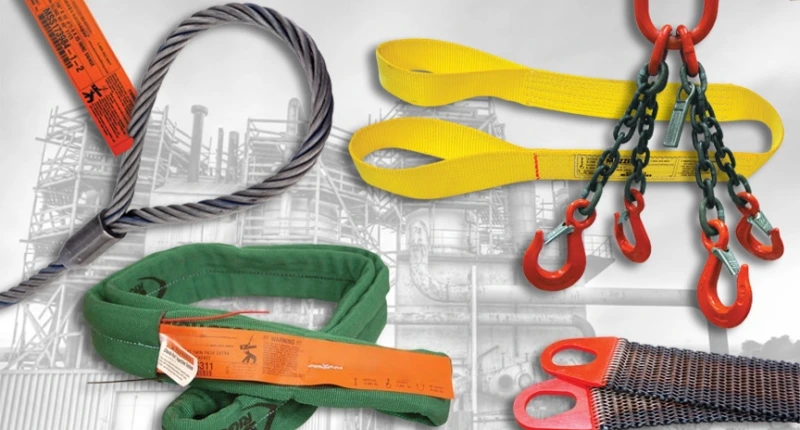
The global demand for specialized rigging hardware has scaled by 12.4% annually since 2022, shifting focus from heavy metal components to lighter, synthetic materials. While traditional cranes provide the vertical force, the sling acts as the specific point of contact that determines if a load remains stable or shifts during a 20-foot lift.
Selecting the wrong material for a specific chemical environment is a frequent oversight, as polyester dissolves in concentrated sulfuric acid while nylon fails in presence of bleach. Engineering reports from 2024 indicate that 18% of sling failures occur because the material was not matched to the pH level of the surrounding industrial atmosphere.
"A single 2-inch wide polyester web sling can support up to 6,400 lbs in a vertical hitch, but this capacity drops by exactly 50% when used in a choker hitch due to the friction at the point of the choke."
This mechanical reality leads directly into the mathematics of sling angles, where the tension on each leg increases exponentially as the horizontal angle decreases. At a 30-degree horizontal angle, the load on each sling leg is exactly 2.0 times the weight of the load, effectively doubling the stress on the rigging equipment.
| Sling Type | Temperature Limit | Common Safety Factor | Wear Resistance |
| Grade 100 Chain | 400°F (200°C) | 4:1 | High |
| Wire Rope | 200°F (93°C) | 5:1 | Medium |
| Polyester Web | 194°F (90°C) | 5:1 | Low |
| HMPE Synthetic | 150°F (65°C) | 7:1 | Medium-High |
Operating within these thermal and mechanical boundaries prevents the molecular breakdown of fibers, which can lose 20% of their integrity after just 12 months of outdoor UV exposure. UV radiation acts on the polymers in synthetic slings, causing a brittleness that is often invisible until a load test is performed under a 125% proof-load scenario.
Testing procedures standardized in 2023 require that every new batch of lifting slings undergoes a break-test on a sample size of 1 in every 50 units produced. This ensures that the manufacturing consistency meets the ASME B30.9 requirements, which dictate a minimum 5:1 design factor for most non-chain rigging applications.
"Riggers must use wear pads or edge protectors whenever a sling contacts a surface with a radius smaller than the thickness of the sling, as sharp edges can reduce breaking strength by up to 70% instantly."
These protectors prevent the "guillotine effect" during a lift, where the tension forces the sling material against a 90-degree steel flange. Without these buffers, the lifespan of a standard web sling in a high-repetition warehouse environment drops to fewer than 150 total lifts.
| Industry Sector | Preferred Sling Material | Average Load Weight | Annual Growth (2025) |
| Offshore Wind | HMPE / Wire Rope | 50 - 500 Tons | 14.5% |
| Manufacturing | Polyester Web | 1 - 10 Tons | 6.2% |
| Steel Mills | Grade 100 Chain | 5 - 100 Tons | 4.8% |
| Logistics | Nylon Web | 0.5 - 5 Tons | 9.1% |
Statistical surveys from the 2024 Rigging Safety Summit showed that sites utilizing color-coded inspection tags reduced "out-of-date" equipment usage by 44% over a six-month period. These tags allow supervisors to verify the inspection status from a distance of 30 feet, ensuring that no sling with a cut or burn enters the active lifting zone.
The physical inspection covers the entire length of the sling, looking specifically for "red core" yarns that appear when 0.5mm of the outer jacket has been abraded away. Once these warning yarns are visible, the sling has lost a portion of its rated capacity and must be removed from service immediately to prevent a snap under tension.
Proper storage also plays a role in longevity, as slings kept in damp, unventilated lockers can develop mold that eats through synthetic fibers within 90 days. Keeping equipment in a dry, UV-protected environment extends the usable life of polyester and nylon gear by an average of 3.5 years.
The transition from manual rigging to automated lifting systems has not removed the need for slings, but it has increased the precision required in their manufacture. Modern lifting slings now often incorporate RFID chips, allowing for 100% digital tracking of every lift cycle and inspection date throughout the product's life.
Automation integration has led to a 22% increase in the use of roundslings for delicate aerospace components where surface marring is not allowed. These slings distribute the pressure over a wider surface area, keeping the PSI on the load surface below the deformation threshold of aluminum alloys.
"By utilizing a twin-path design, riggers have a secondary load-bearing path that acts as a backup, maintaining 100% of the load even if the outer cover is breached by a snag."
This redundancy is why slings remain a top choice for high-consequence lifts, such as moving expensive medical MRI machines or power grid transformers. The ability to inspect and verify the strength of each component before the crane moves is a safety layer that integrated machinery often lacks.
Market analysis from early 2026 suggests that the move toward sustainable materials will lead to the introduction of recycled polymer slings with a 10% lower carbon footprint. These new models are undergoing testing in 12 different labs to ensure they match the 9,800 PSI tensile strength of virgin polyester.
Final selection comes down to the specific physics of the job site, including the headroom available and the wind speed at the time of the lift. At wind speeds over 25 mph, the surface area of a web sling can catch the air, making a wire rope or chain sling the more stable choice for keeping the load on a vertical path.